
Spain offers a genuinely different experience depending on which region you focus on — Gaudí’s surreal architecture in Barcelona, world-class art and royal history in Madrid, and Moorish palaces and flamenco culture in Andalusia to the south. This Spain travel guide walks through that classic three-region route, along with when to go and the logistics that make covering all three in one trip realistic.
Why This Route Covers Spain’s Best Sides
Barcelona, Madrid, and Andalusia represent three genuinely distinct sides of Spain — Catalan coastal culture, the political and artistic capital, and the historic Moorish south. This Spain travel guide follows that progression, connected by Spain’s excellent high-speed rail network, making the country considerably easier to cover in a single trip than its size might suggest.
Barcelona: 3-4 Days
Barcelona is often the starting point for a first Spain trip, and its combination of beach, architecture, and food makes it an easy place to spend several days.
What to see:
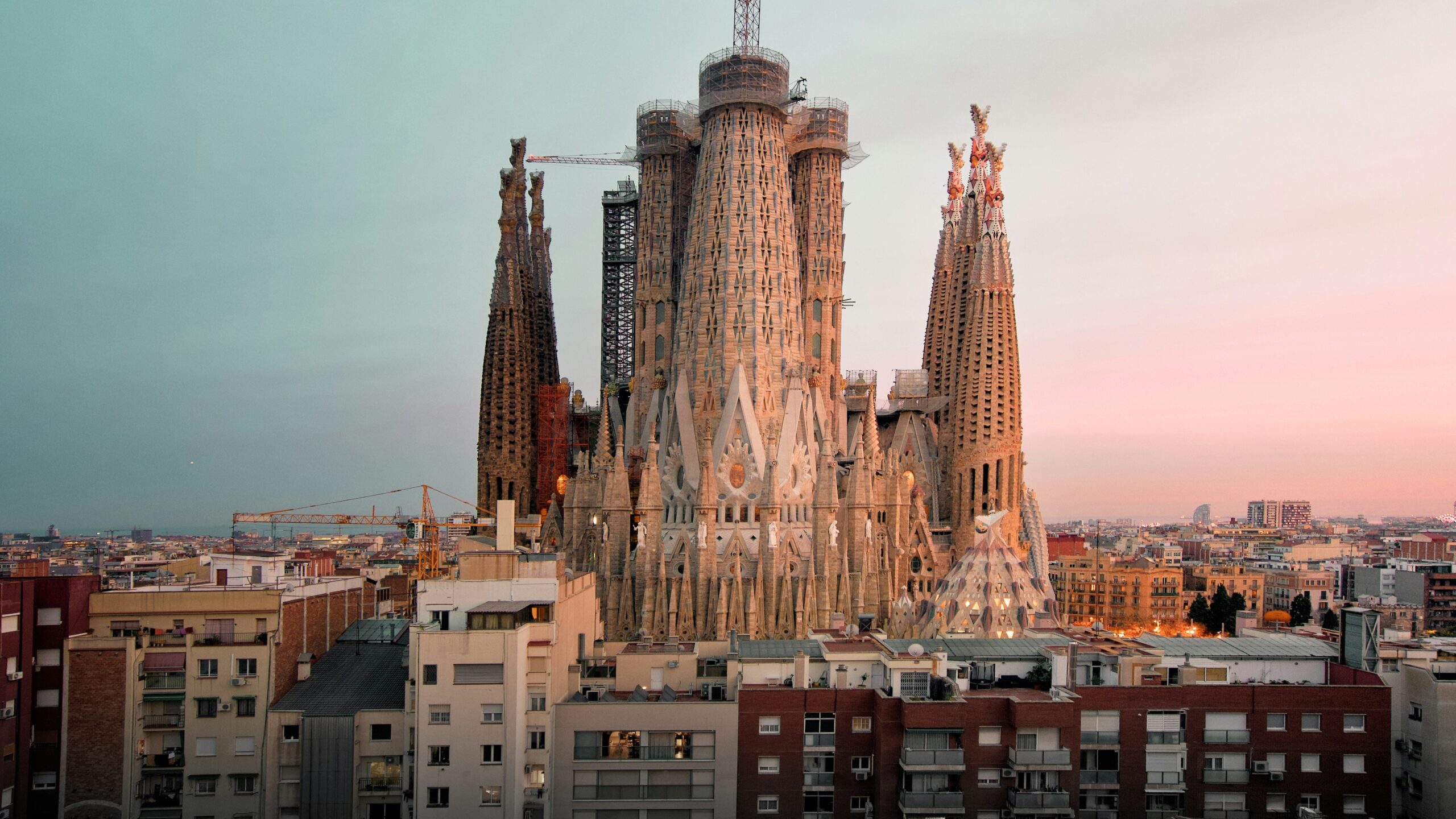
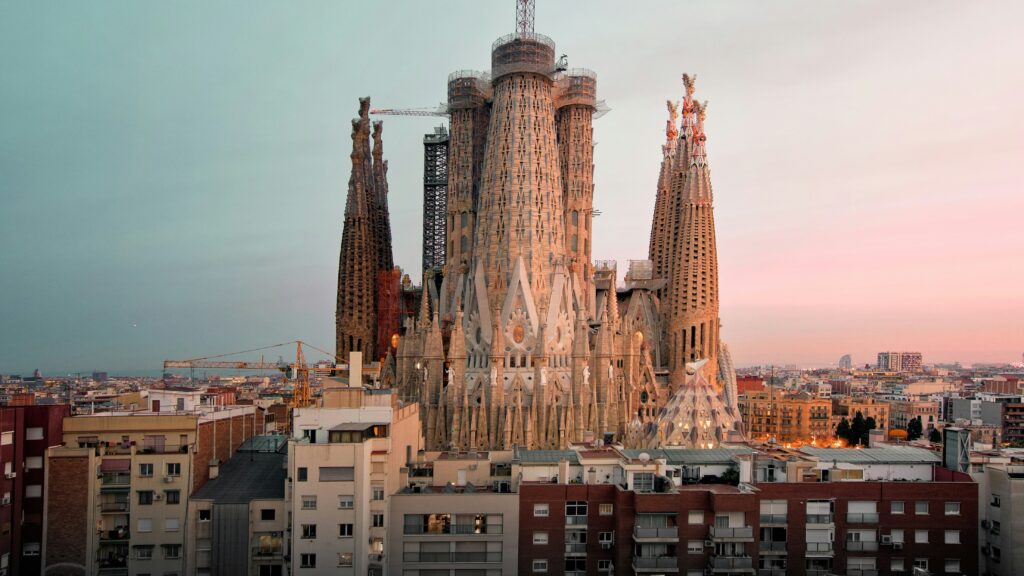
- Sagrada Família — Gaudí’s still-unfinished basilica, and the single most-visited site in Spain; book timed entry well in advance
- Park Güell — another Gaudí landmark, offering mosaic-covered structures and sweeping city views
- The Gothic Quarter (Barri Gòtic) — Barcelona’s medieval old town, best explored on foot
- La Boqueria Market — a lively food market just off Las Ramblas, good for a casual lunch
- Barceloneta Beach — a genuine city beach, unusual for a major European capital-adjacent city
Three to four days allows time for Barcelona’s major sites along with some unstructured wandering through its neighborhoods.
Madrid: 2-3 Days
A high-speed AVE train connects Barcelona to Madrid in around 2.5 hours, delivering you into Spain’s political and cultural capital.
What to see:
- The Prado Museum — one of the world’s great art museums, home to major works by Velázquez, Goya, and El Greco
- Reina Sofía Museum — home to Picasso’s Guernica, and a strong complement to the more classical Prado
- Retiro Park — a large, elegant park good for an afternoon break from museum-heavy sightseeing
- Plaza Mayor and the historic center — Madrid’s grand central square, surrounded by tapas bars and older architecture
- An evening of tapas hopping — Madrid’s tapas culture is central to the city’s social life, and moving between several small bars over an evening is a genuinely local way to experience it
Two to three days covers Madrid’s essentials, particularly for travelers prioritizing the Prado and Reina Sofía.
Andalusia: 4-5 Days
Southern Spain’s Andalusia region holds some of the country’s most significant Moorish architectural heritage, along with the birthplace of flamenco.
What to see in Seville:
- The Alcázar — a stunning royal palace blending Islamic and Christian architectural styles
- Seville Cathedral and the Giralda tower — the largest Gothic cathedral in the world, with sweeping city views from the bell tower
- A flamenco show — Seville is widely considered the art form’s spiritual home
What to see in Granada:
- The Alhambra — a Moorish palace and fortress complex considered one of the finest examples of Islamic architecture in the world; tickets sell out weeks in advance during peak season and must be booked ahead
- The Albaicín — Granada’s old Moorish quarter, with narrow streets and views back toward the Alhambra
What to see in Córdoba (optional add-on):
- The Mezquita — a former mosque turned cathedral, famous for its forest of striped arches, and one of the most architecturally unusual buildings in Europe
Four to five days allows a reasonable pace across Seville and Granada, with Córdoba as a worthwhile half-day or full-day addition for travelers with extra time.
Suggested 12-Day Itinerary
| Days | Location | Focus |
|---|---|---|
| 1-4 | Barcelona | Sagrada Família, Gothic Quarter, beach |
| 5 | Travel to Madrid | High-speed train |
| 6-7 | Madrid | Prado, Reina Sofía, tapas |
| 8 | Travel to Seville | High-speed train |
| 9-10 | Seville | Alcázar, Cathedral, flamenco |
| 11-12 | Granada | Alhambra, Albaicín |
Travelers with more time often add Córdoba between Seville and Granada, or extend the trip with a coastal stop along the Costa del Sol.
Getting Around
- Barcelona to Madrid: The AVE high-speed train covers this route in about 2.5 hours, city center to city center — considerably faster and more convenient than flying once airport transfers are considered.
- Madrid to Seville: Around 2.5 hours by AVE train.
- Seville to Granada: No direct high-speed line, but a regional train or bus covers the route in roughly 3 hours.
- Within Andalusian cities: Seville, Granada, and Córdoba are all walkable historic centers, and a rental car is unnecessary unless you’re planning to explore smaller towns or the coast independently.

When to Go
April to June and September to October are the best windows for this Spain travel guide’s full route, offering comfortable temperatures across all three regions. July and August bring intense heat to Madrid and especially Andalusia, where temperatures regularly exceed 40°C (104°F) in Seville and Córdoba — genuinely difficult conditions for daytime sightseeing. Barcelona’s coastal location makes summer more bearable there than inland, though it also brings the heaviest crowds. Winter works reasonably well for Madrid and Barcelona, both of which stay mild by European standards, while Andalusia’s winter is notably milder than the rest of the country, making it a decent shoulder-season option even in the cooler months.
Practical Tips
- Book the Alhambra tickets as early as possible — this is consistently one of the hardest tickets to secure in Spain, with limited daily visitor numbers and demand that regularly outstrips supply months in advance.
- Adjust to Spanish meal times — lunch typically runs later (2-4pm) and dinner later still (9pm or beyond), especially in Madrid and the south; many restaurants simply aren’t open at typical Northern European dinner hours.
- Validate and book high-speed train tickets in advance for the best fares — prices rise as departure dates approach, similar to airline pricing.
- Pack for genuine heat if traveling in summer, particularly for Andalusia, and plan sightseeing around the cooler morning and evening hours.
- Learn a few basic Spanish phrases — helpful throughout, though especially so outside the most touristed parts of Barcelona and Madrid.
Frequently Asked Questions
How many days do you need for a good Spain trip? 12-14 days allows a comfortable pace covering Barcelona, Madrid, and Andalusia’s highlights. A shorter 8-9 day trip is workable if you focus on just two of the three regions.
Should I visit Barcelona or Madrid first? Either works well logistically, given the fast train connection between them. Many travelers start in Barcelona for its more immediately photogenic architecture and beach access, saving Madrid’s museum-heavy itinerary for the middle of the trip.
Is it worth adding Córdoba to an Andalusia itinerary? For travelers with the extra time, yes — the Mezquita is genuinely unlike anything else on this itinerary, and Córdoba’s old Jewish quarter is worth a wander. It’s easily added as a stop between Seville and Granada.
Do I need to speak Spanish to travel this route comfortably? Not strictly, especially in Barcelona and Madrid, where English is widely understood in tourist areas. That said, some basic Spanish phrases go a long way, particularly in smaller towns in Andalusia.
Planning more of your Europe trip? Check out our best time to visit Europe guide, or browse all our Europe travel guides for more.