
A desert safari is, for most visitors, the single experience that makes a Middle East trip feel genuinely different from anywhere else — dune bashing in a 4×4, an evening under a sky with almost no light pollution, and a night in a Bedouin-style camp. But “desert safari” covers a range of experiences that vary considerably by country. This guide walks through what to actually expect, and how the experience differs across the region’s most popular desert destinations.
What a Typical Desert Safari Includes
Most desert safaris across the Middle East share a common structure, even as the landscape and cultural details shift by country:
- Dune bashing — off-road 4×4 driving over the dunes, typically the opening activity of an afternoon or evening safari
- A scenic stop for sunset photos, often at a high dune vantage point
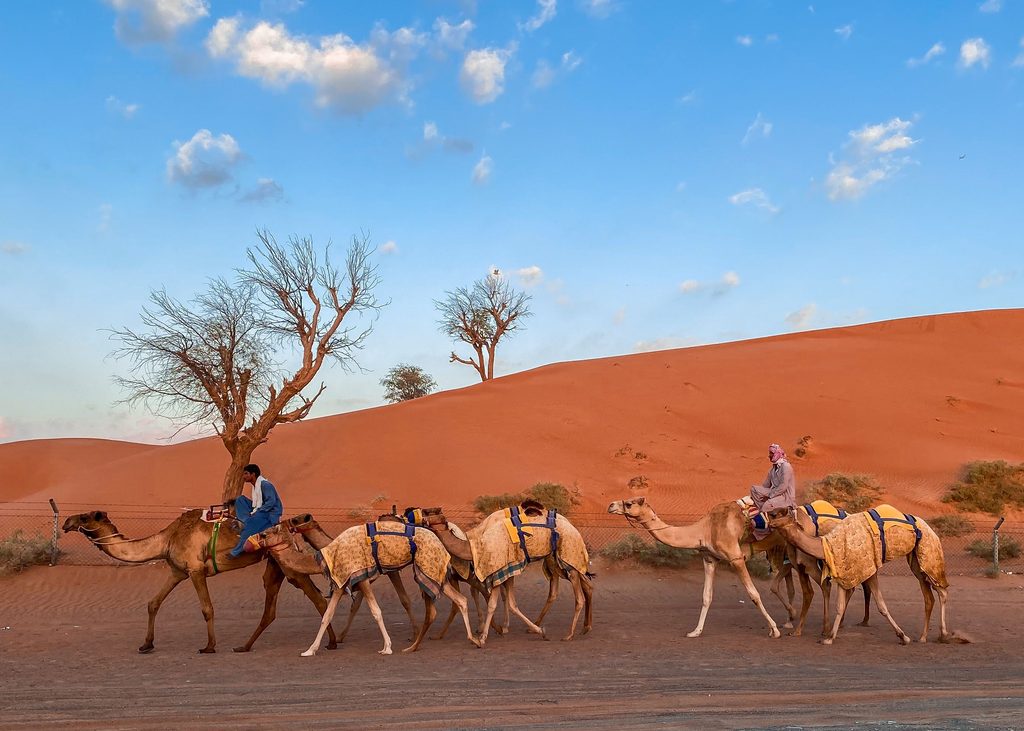
- Camel riding — usually a short, guided ride rather than an extended trek
- An evening camp experience, including a traditional meal, sometimes live entertainment (belly dancing or a Tanoura performance in some countries), and shisha (water pipe) available for those interested
- Stargazing, given the minimal light pollution most desert camps offer compared to nearby cities
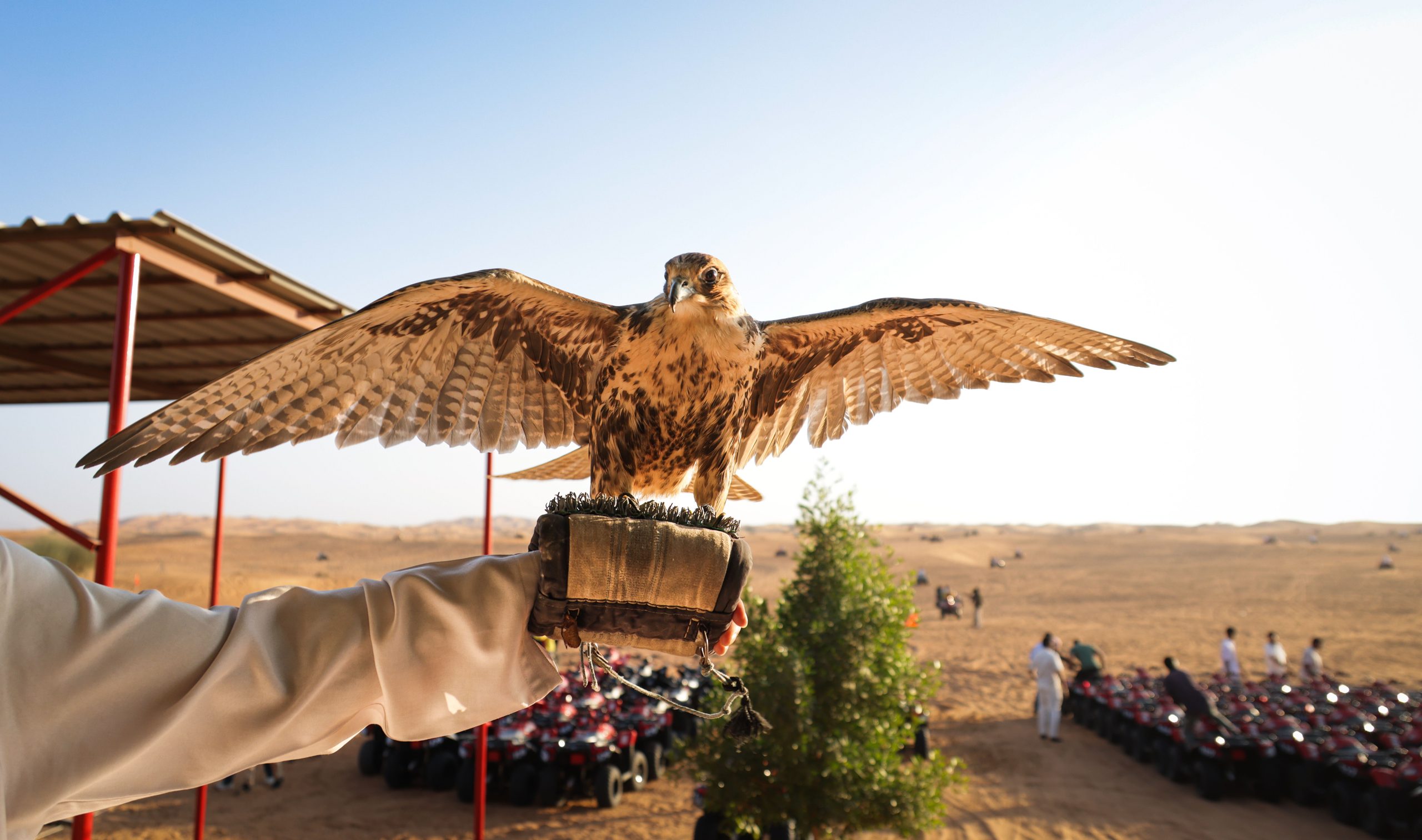
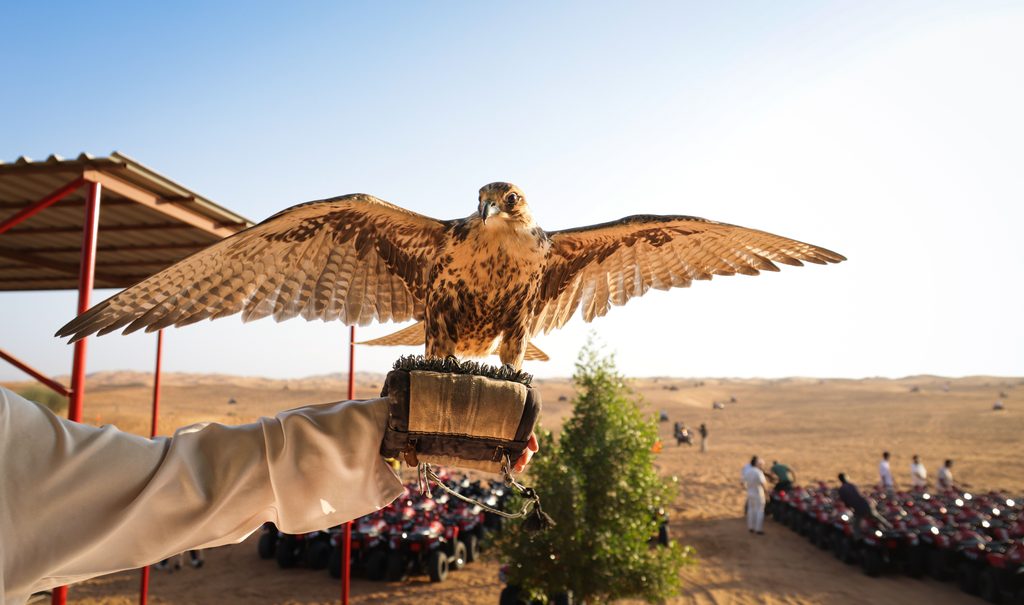
Some operators also offer sandboarding, dune buggy rentals, or falconry demonstrations as add-ons.
Dubai and Abu Dhabi (UAE)
The UAE offers the most commercialized, easily bookable version of a desert safari, widely available as a half-day or evening tour from either city.
What’s distinctive: UAE desert safaris tend to be the most polished and infrastructure-heavy option on this list, with large-scale camps, buffet dinners, and organized entertainment. Overnight stays are available but a single evening safari (typically 4-6 hours) is the more common format here, unlike Jordan or Oman, where an overnight camp stay is closer to the standard.
Wadi Rum (Jordan)
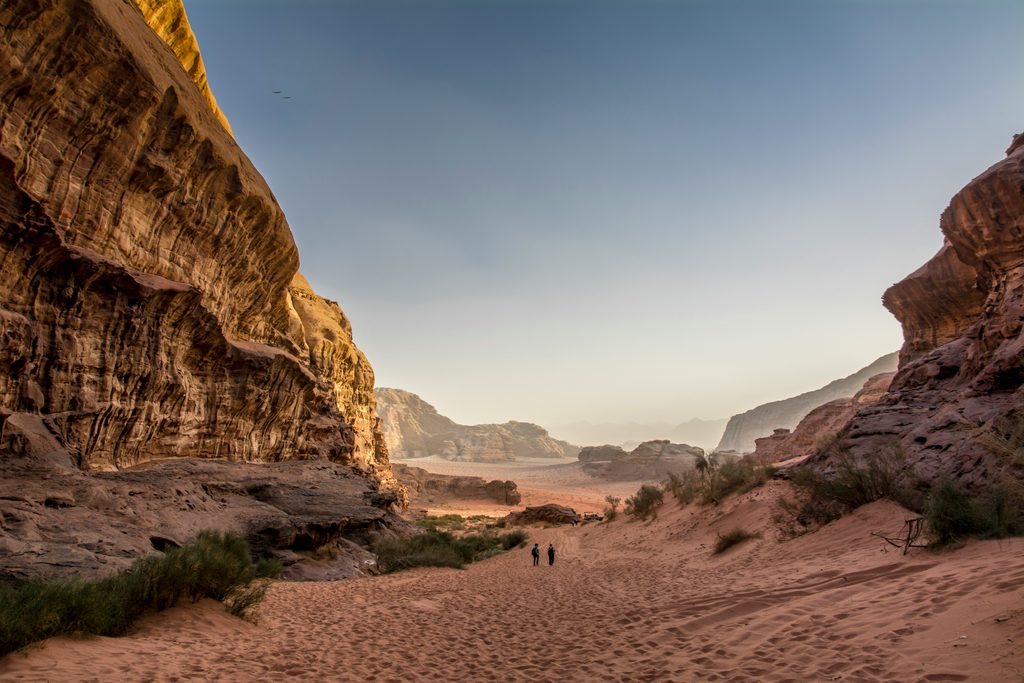
Wadi Rum offers arguably the most visually dramatic desert landscape in the region, having served as a filming location for numerous major films.
What’s distinctive: Wadi Rum safaris center heavily around an overnight stay in a Bedouin-style camp, considered close to essential by most visitors rather than optional. The valley’s dramatic rock formations, rather than pure dune fields, are a major part of the appeal here, and jeep tours typically include stops at rock bridges, ancient inscriptions, and scenic viewpoints alongside the standard dune driving.
The Wahiba Sands (Oman)
Oman’s Wahiba Sands (also called Sharqiya Sands) offer classic orange dune scenery with a genuinely traditional character, reflecting the country’s broader, deliberately understated approach to tourism.
What’s distinctive: Wahiba Sands experiences tend to feel less commercialized than the UAE’s larger operations, often run through smaller family-owned camps. An overnight stay is standard here as well, and the surrounding area includes opportunities to visit local Bedouin communities as part of a more culturally-oriented experience.
Saudi Arabia (AlUla and Riyadh’s Edge of the World Region)
Saudi Arabia’s rapidly developing tourism sector has introduced desert experiences around AlUla and Riyadh, including hot air balloon rides over the AlUla desert canyon landscape alongside more traditional 4×4 excursions.
What’s distinctive: As one of the newest entries to organized desert tourism in the region, Saudi Arabia’s offerings are still expanding, with a notable emphasis on combining desert landscapes with the country’s significant archaeological sites, particularly around AlUla’s Hegra.
Qatar (Khor Al Adaid, the Inland Sea)
Qatar’s desert safari culminates at a genuinely unusual geographic feature: a landlocked inlet where the desert meets the sea.
What’s distinctive: The Inland Sea (Khor Al Adaid) gives Qatar’s desert safari experience a different centerpiece than the other destinations on this list — rather than ending at a standard dune viewpoint, the drive concludes at this UNESCO-recognized natural reserve, combining desert and coastal scenery in one trip.
How to Choose the Right Desert Safari for Your Trip
- Want the most polished, easy-to-book option? The UAE (Dubai or Abu Dhabi) offers the most straightforward, widely available experience with minimal planning required.
- Want dramatic scenery and an overnight desert stay? Wadi Rum in Jordan is generally considered the most visually striking option, and the overnight camp is a core part of the experience.
- Want something less commercialized? Oman’s Wahiba Sands offers a quieter, more traditional alternative to the UAE’s larger-scale operations.
- Combining desert with major archaeological sites? AlUla in Saudi Arabia pairs desert scenery directly with Hegra’s ancient tombs.
Practical Tips
- Book through a reputable operator — safety standards for dune bashing vary, and checking reviews specifically for vehicle maintenance and driver experience is worth the extra research.
- Dress appropriately — even in the desert, modest clothing is generally expected, and a light jacket is worth packing regardless of daytime heat, since desert nights cool dramatically.
- If prone to motion sickness, mention it before booking — dune bashing involves sharp turns and steep drops that can be intense for some travelers; most operators can adjust intensity on request.
- Bring a proper camera or phone with a night mode — the stargazing and sunset photo opportunities are a major part of the appeal, and desert camps rarely have artificial lighting to compensate for a weak camera setup.
- Confirm what’s included before booking — meals, camel rides, and entertainment vary by package and operator, so checking specifics avoids surprises.
When to Go
October to April is the best window for desert safaris across nearly the entire region — daytime and evening temperatures stay comfortable for outdoor activities, particularly important for the overnight camp experiences in Jordan and Oman. May through September brings extreme daytime heat across the Gulf and Jordan’s desert regions, though many UAE evening safaris still operate year-round given their shorter, evening-focused format that avoids the hottest part of the day.
Frequently Asked Questions
Which country has the best desert safari in the Middle East? It depends on what you’re after — the UAE offers the most convenient, easily booked option; Jordan’s Wadi Rum delivers the most dramatic scenery and a near-essential overnight stay; Oman offers a quieter, more traditional alternative to both.
Is desert safari dune bashing safe? Generally yes, with a reputable operator using well-maintained vehicles and experienced drivers — checking reviews specifically for safety feedback before booking is a sensible precaution, as with any adventure activity.
Do I need to stay overnight for a desert safari? It depends on the destination — UAE safaris are often single-evening experiences, while Jordan and Oman’s desert experiences typically center around an overnight camp stay as the standard format.
What should I wear on a desert safari? Comfortable, modest clothing along with a light jacket or scarf for the evening, since desert temperatures drop significantly after sunset regardless of how hot the daytime was.
Planning more of your Middle East trip? Check out our best time to visit the Middle East guide, or browse all our Middle East travel guides for more.