
Jordan packs three genuinely different landscapes into a country roughly the size of Indiana — a rose-red ancient city carved into cliffs, a desert valley so otherworldly it’s stood in for Mars in several films, and the lowest point on Earth, where you can’t help but float. This Jordan travel guide walks through that core loop, along with the practical details of getting between each stop.
Why This Loop Defines Most Jordan Trips
Nearly every Jordan travel guide converges on the same core route for good reason: Petra, Wadi Rum, and the Dead Sea sit within a manageable drive of each other in the country’s south and center, and together they cover archaeology, desert adventure, and pure relaxation in a way few countries this size can match. Amman, the capital, typically bookends the trip as an arrival and departure point.
Amman: 1-2 Days
Most Jordan itineraries begin and end in Amman, and while it’s often treated as a brief stopover, the city has more to offer than a quick layover suggests.
What to see:
- The Roman Theatre — a remarkably well-preserved 6,000-seat amphitheater right in the city center
- The Citadel (Jabal al-Qal’a) — hilltop ruins spanning multiple eras, with sweeping views over Amman
- Rainbow Street — a lively strip of cafés, galleries, and restaurants, good for an evening out
- Downtown Amman’s souks — for a more traditional shopping and food experience
One to two days is generally enough for Amman before heading south toward Petra.
Petra: 2 Days
Petra is, for most visitors, the reason the trip happened in the first place, and it rewards more than a single rushed day.
What to see:
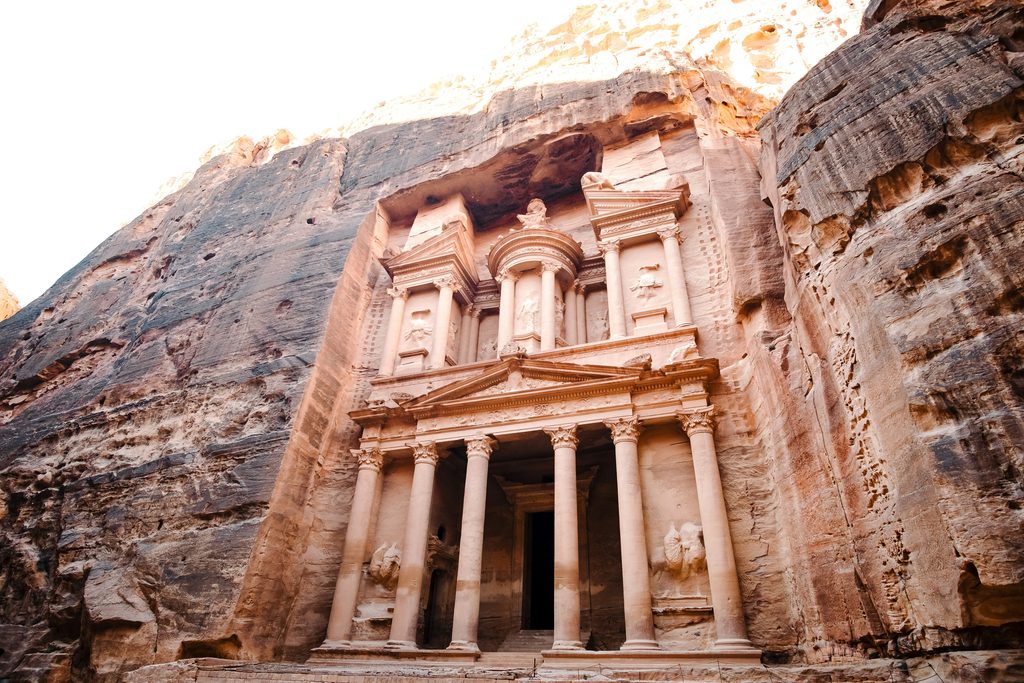
- The Siq and the Treasury (Al-Khazneh) — the narrow canyon entrance opens dramatically onto Petra’s most iconic facade
- The Monastery (Ad-Deir) — a demanding but rewarding climb (around 800 steps) to a second, larger rock-cut structure
- The Royal Tombs — elaborate facades along the site’s main trail, easily combined with the Treasury visit
- Petra by Night — held several evenings a week, the Siq and Treasury illuminated by candlelight, a genuinely different experience from the daytime visit
Two full days allows time to see both the main trail and the longer hike to the Monastery without rushing either.
Wadi Rum: 1-2 Days
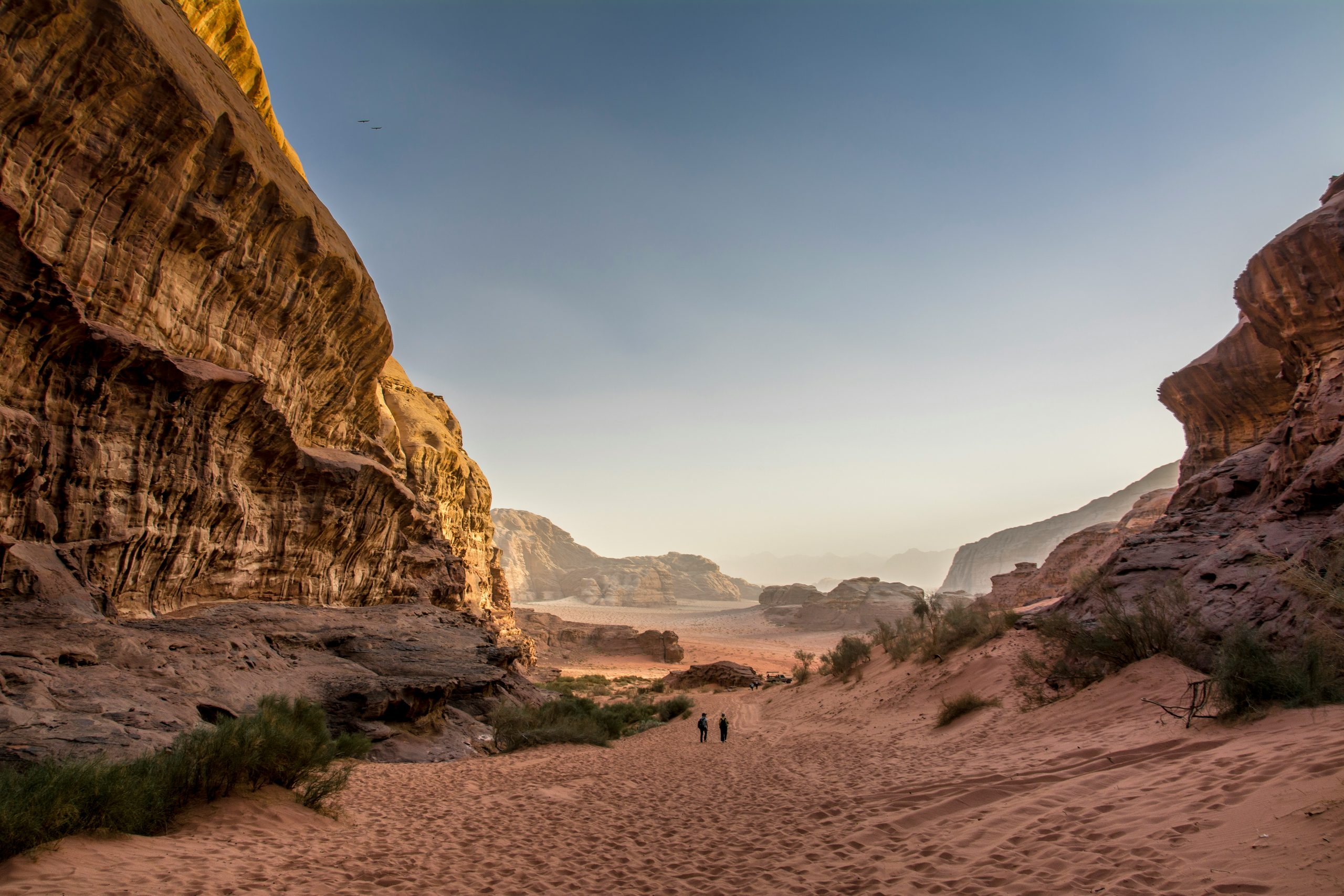
A couple of hours from Petra, Wadi Rum’s dramatic red-sand valley and towering rock formations have made it a filming location for everything from Lawrence of Arabia to The Martian and Dune.
What to do:
- A jeep tour through the valley, typically stopping at rock bridges, ancient inscriptions, and scenic viewpoints
- An overnight stay in a Bedouin-style desert camp, widely considered one of the highlights of a Jordan trip, especially for stargazing given the valley’s minimal light pollution
- A short camel ride or a sunrise/sunset viewpoint hike, both easily arranged through most camps
One night in a desert camp is the standard, and most travelers consider it non-negotiable — this is Jordan’s most memorable overnight stay by a wide margin.
The Dead Sea: 1-2 Days
The trip’s final stretch usually winds down at the Dead Sea, the lowest point on Earth’s surface, where the extreme salinity makes floating almost effortless.
What to do:
- Float in the Dead Sea itself — the mineral-rich water and mud are widely marketed for their skin benefits, and most resorts offer private beach access
- Spa treatments — many Dead Sea resorts specialize in wellness and mud treatments drawing on the lake’s mineral content
- A day trip to Madaba or Mount Nebo, both a short drive away, for Byzantine mosaics and views (on a clear day) toward the Jordan Valley and even Jerusalem
One to two days at a resort is typical, often used as a relaxing close to a physically active trip.
Suggested 7-Day Itinerary
| Days | Location | Focus |
|---|---|---|
| 1-2 | Amman | Roman Theatre, Citadel, Rainbow Street |
| 3-4 | Petra | Treasury, Monastery, Petra by Night |
| 5 | Wadi Rum | Jeep tour, overnight desert camp |
| 6-7 | Dead Sea | Floating, spa, Madaba day trip |
Travelers with more time often add a stop at Jerash’s Roman ruins north of Amman, or extend Wadi Rum with a multi-day trekking option.
Getting Around
- Renting a car is a popular and practical option for this route, since Jordan’s main highways connecting Amman, Petra, Wadi Rum, and the Dead Sea are generally well maintained.
- Private drivers are widely used by tour operators and independent travelers alike, removing the need to navigate unfamiliar roads and desert turnoffs.
- The Jordan Pass, an official government program, bundles the visa fee with entry to Petra and dozens of other sites, and is worth arranging before arrival for most visitors.
When to Go
March to May and September to November are the best windows for this Jordan travel guide, offering comfortable daytime temperatures for exploring Petra and Wadi Rum without the extremes of summer heat or winter cold. June to August pushes temperatures into the mid-30s°C, particularly uncomfortable for the exposed desert stretches of Petra and Wadi Rum. Winter (December-February) brings Petra’s quietest crowds, but desert nights — especially in Wadi Rum — can drop close to freezing, and occasional rain can temporarily close the Siq for flash-flood safety.
Practical Tips
- Book the Jordan Pass before arrival — it covers the visa fee (for eligible nationalities staying a minimum number of nights) and entry to Petra, often at meaningful savings over paying separately.
- Pack layers for Wadi Rum overnight stays, since desert nights are cold year-round, regardless of how hot the daytime temperature was.
- Wear genuinely sturdy footwear for Petra, particularly if attempting the Monastery hike, which involves uneven stone steps over a sustained climb.
- Dress modestly outside resort areas, particularly in Amman and smaller towns, out of respect for local customs.
- Carry cash (Jordanian dinar) for smaller vendors and tips, though cards are increasingly accepted at hotels and larger establishments.
Frequently Asked Questions
How many days do you need for a good Jordan trip? 7-9 days allows a comfortable pace covering Amman, Petra, Wadi Rum, and the Dead Sea. A shorter 5-day version is workable if you compress or skip the Amman stopover.
Is the Jordan Pass worth buying? For most eligible travelers, yes — it typically saves money compared to paying for the visa and individual site entries separately, and it simplifies arrival logistics considerably.
Do I need a 4×4 or guide for Wadi Rum? A private jeep tour with a local Bedouin guide is the standard way to experience Wadi Rum, and is generally recommended over independent driving, both for navigation and for the added context a guide provides.
Is Jordan safe for tourists? Jordan has a well-established tourism industry and is generally considered one of the more stable destinations in the region, with millions of visitors passing through its main sites annually. As with any international trip, checking current travel advisories before booking is a sensible step.
Planning more of your Middle East trip? Check out our best time to visit the Middle East guide, or browse all our Middle East travel guides for more.