
Turkey straddles two continents both literally and culturally, and a well-planned trip reflects that range — a city where Europe and Asia meet across the Bosphorus, a lunar-looking valley best seen from a hot air balloon at sunrise, and a Mediterranean coastline that mixes ancient ruins with modern beach resorts. This Turkey travel guide covers that core route, along with the practical details that make the trip work.
Why This Three-Region Route Works
Istanbul, Cappadocia, and Antalya cover three genuinely different sides of Turkey — a historic, transcontinental megacity, a surreal volcanic-rock landscape in Central Anatolia, and a Mediterranean coast layered with Roman ruins. This Turkey travel guide follows that classic progression, connected by short domestic flights that make covering all three in under two weeks entirely realistic.
Istanbul: 3-4 Days
Most Turkey trips begin (and often end) in Istanbul, a city with enough layered history to fill a week on its own.
What to see:
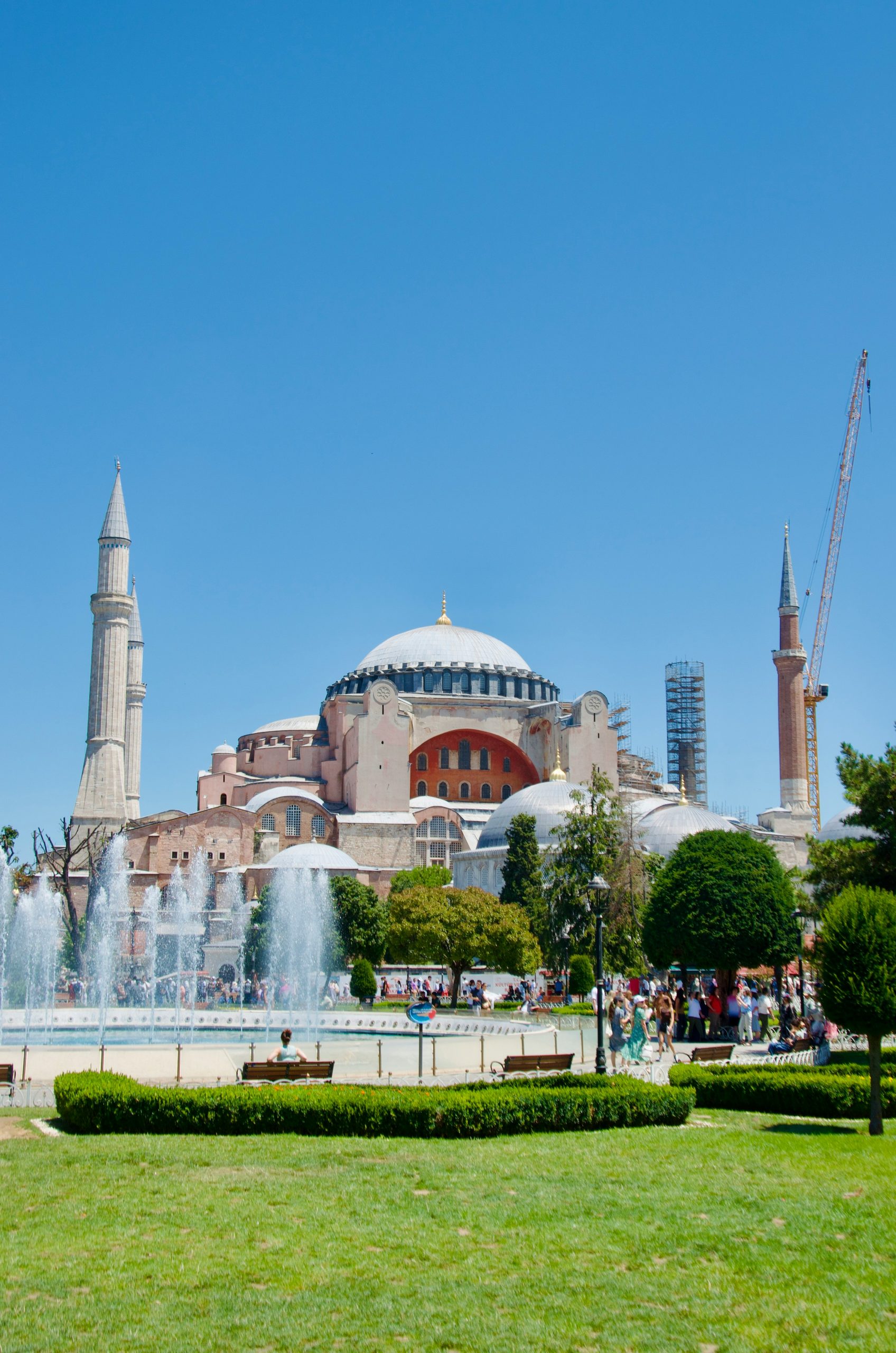
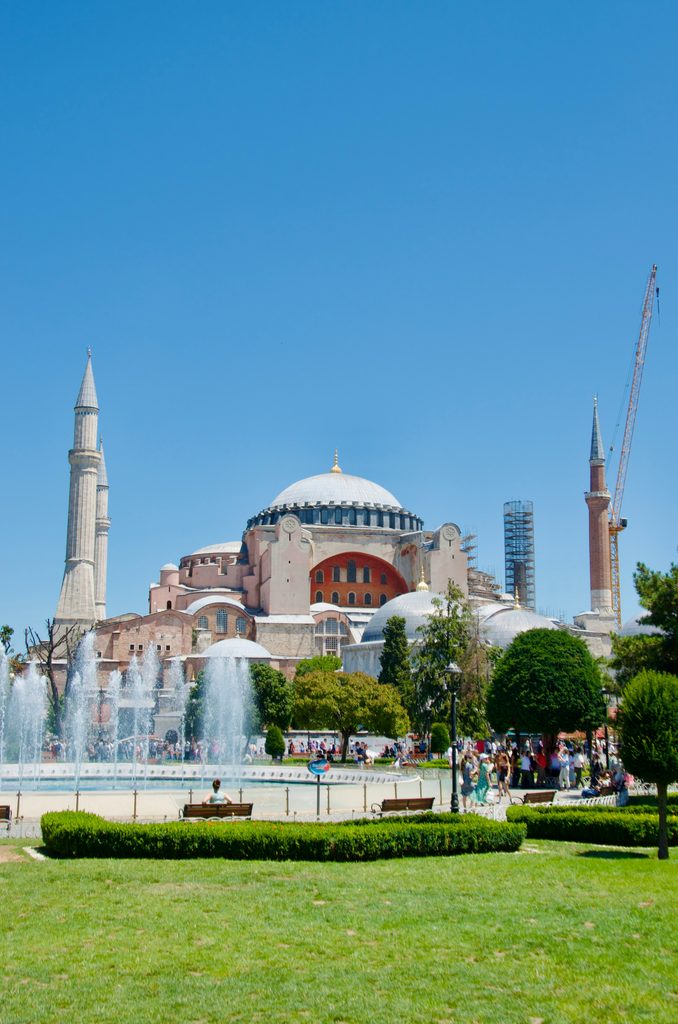
- Hagia Sophia — a Byzantine cathedral turned Ottoman mosque turned museum turned mosque again, and one of the most architecturally significant buildings in the world
- The Blue Mosque (Sultan Ahmed Mosque) — directly across from Hagia Sophia, known for its striking interior tilework
- Topkapi Palace — the former residence of Ottoman sultans, with sweeping views over the Bosphorus
- The Grand Bazaar and Spice Bazaar — two of the world’s oldest and largest covered markets
- A Bosphorus cruise — a relaxed way to see the city’s two continents and its skyline from the water
Three to four days allows a comfortable first look at Istanbul’s old city (Sultanahmet), along with time to cross into the newer districts on the European side or across to Asia.

Cappadocia: 2-3 Days
A short flight from Istanbul brings you to Cappadocia, a region defined by volcanic rock formations, underground cities, and one of the most photographed sunrise scenes anywhere in the world.
What to see:
- A hot air balloon ride at sunrise — Cappadocia’s single most iconic experience, with hundreds of balloons filling the sky over the valley most mornings, conditions permitting
- Göreme Open-Air Museum — a UNESCO World Heritage Site featuring rock-cut churches with preserved Byzantine frescoes
- Underground cities (Derinkuyu or Kaymaklı) — multi-level ancient underground settlements, originally built for shelter during invasions
- The fairy chimneys — the region’s distinctive cone-shaped rock formations, best explored on a valley hike or ATV tour
- A cave hotel stay — many properties in Cappadocia are built into or styled after the region’s natural rock formations, adding genuine atmosphere to the stay itself
Two to three days allows time for at least one balloon flight (weather-dependent, so building in a buffer day is wise) alongside the underground cities and valley hikes.
Antalya and the Turkish Riviera: 2-3 Days
Antalya anchors Turkey’s Mediterranean coast, known internationally as a package-holiday destination, but its old town and surrounding ancient sites offer more depth than the resort strip suggests.
What to see:
- Kaleiçi (the old town) — a atmospheric quarter of Ottoman-era houses, cobbled lanes, and the Roman-era Hadrian’s Gate
- Düden Waterfalls — dramatic falls where fresh water plunges directly into the Mediterranean
- Perge and Aspendos — well-preserved ancient ruins a short drive from the city, including one of the best-preserved Roman theaters in the world
- Beach time along the Turkish Riviera — the coast’s resort infrastructure caters heavily to sun-and-sea travelers, an easy add-on after Istanbul and Cappadocia’s more intensive sightseeing
Two to three days suits most travelers using Antalya as a relaxing final leg after the busier stops earlier in the trip.
Suggested 9-Day Itinerary
| Days | Location | Focus |
|---|---|---|
| 1-4 | Istanbul | Hagia Sophia, Blue Mosque, Bosphorus |
| 5 | Travel to Cappadocia | Domestic flight |
| 6-7 | Cappadocia | Balloon ride, underground cities, valleys |
| 8 | Travel to Antalya | Domestic flight |
| 9 | Antalya | Old town, waterfalls |
Travelers with more time often extend this route with a stop in Pamukkale, known for its white travertine terraces and the ancient ruins of Hierapolis, located between Cappadocia and Antalya.
Getting Around
- Domestic flights connect Istanbul, Cappadocia (Kayseri or Nevşehir airports), and Antalya in about 1-1.5 hours each, and are by far the most practical way to cover this itinerary’s distances.
- Within Istanbul, an extensive tram, metro, and ferry network covers most tourist areas, with ferries offering a particularly scenic way to cross between the European and Asian sides.
- Within Cappadocia, many visitors rent a car or ATV to explore the valleys independently, though guided tours are equally common and handle the logistics of underground cities and viewpoints.
When to Go
April to June and September to October are the best windows for this Turkey travel guide’s full route, offering comfortable temperatures across all three regions and, importantly for Cappadocia, more stable balloon flight conditions. July and August bring the most reliable weather for Antalya’s beaches but also intense heat inland, particularly uncomfortable for extended Istanbul sightseeing. Winter can still work for Istanbul (mild by European standards) and even offers occasional snow-dusted balloon flights in Cappadocia, though Antalya’s beach season effectively ends, and balloon flights are more frequently grounded by winter weather.
Practical Tips
- Book Cappadocia balloon flights with a buffer day, since flights are frequently canceled or rescheduled due to wind — building in flexibility avoids missing the experience entirely.
- Most nationalities need an e-visa, arranged online in advance and generally straightforward to obtain.
- Dress modestly for mosque visits, including covering shoulders and, for women, hair — scarves are often available to borrow at major sites like the Blue Mosque.
- Bargain at the Grand Bazaar, but expect fixed pricing at modern shops, restaurants, and hotels.
- Carry Turkish lira for smaller vendors, though cards are widely accepted in cities and tourist areas.
Frequently Asked Questions
How many days do you need for a good Turkey trip? 9-11 days allows a comfortable pace covering Istanbul, Cappadocia, and Antalya. A shorter 6-7 day trip is workable if you focus on just two of the three regions.
Is the Cappadocia balloon ride worth the cost? Most travelers consider it one of the highlights of a Turkey trip, offering a genuinely unique view of the fairy chimney landscape at sunrise. Given frequent weather cancellations, booking early in your Cappadocia stay (rather than the last morning) is a sensible precaution.
Should I visit Istanbul or Cappadocia first? Either works logistically, though starting in Istanbul (as this itinerary does) is common simply due to stronger international flight connections, saving Cappadocia’s more relaxed pace for the middle of the trip.
Is Turkey a good value destination? Yes — Turkey generally offers strong value compared to Western Europe for accommodation, food, and domestic transport, making it popular with a wide range of budgets, from backpackers to travelers seeking a more comfortable trip.
Planning more of your Middle East trip? Check out our best time to visit the Middle East guide, or browse all our Middle East travel guides for more.