
The India Golden Triangle tour is the country’s most classic introduction for first-time visitors, and it earns that status honestly — three cities, each dramatically different from the other, connected by manageable travel distances and covering everything from Mughal architecture to royal Rajasthani palaces. This guide walks through the full route: Delhi’s chaos and history, Agra’s Taj Mahal, and Jaipur’s pink-painted forts, along with the logistics that make the loop work.
Why the Golden Triangle Is Still the Classic First India Trip
India is enormous, and picking a starting point can be genuinely overwhelming. The India Golden Triangle tour solves that problem by concentrating three of the country’s most iconic experiences into a single, well-connected loop, all within a few hundred kilometers of each other. Delhi gives you the capital’s layered history, from Mughal-era monuments to British colonial architecture. Agra delivers the single most recognizable building in the country. Jaipur rounds it out with Rajasthan’s palace culture and a genuinely different regional character. For a first visit to India, it’s hard to design a more efficient introduction.
Delhi: 2-3 Days
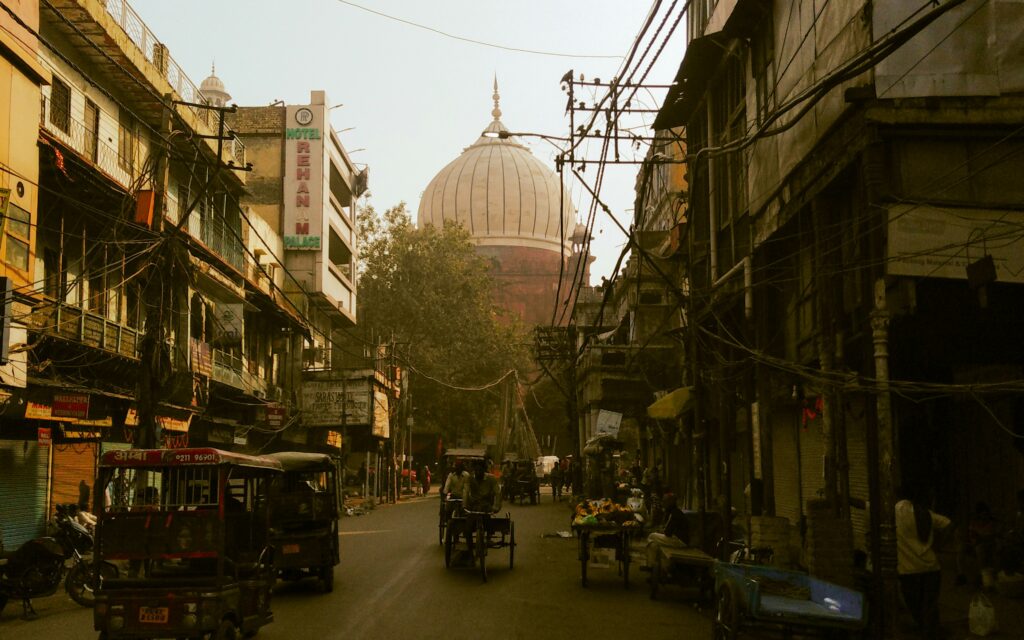
Delhi is really two cities in one — Old Delhi’s dense, historic lanes, and New Delhi’s wide colonial-era boulevards — and both are worth exploring.
What to see in Old Delhi:
- Jama Masjid — one of India’s largest mosques, with sweeping rooftop views over the old city
- Chandni Chowk — a chaotic, centuries-old market street, best explored on foot or by cycle rickshaw, with excellent street food along the way
- Red Fort (Lal Qila) — the former seat of Mughal power, a UNESCO World Heritage Site
What to see in New Delhi:
- Humayun’s Tomb — often considered a precursor to the Taj Mahal’s architectural style, and less crowded
- India Gate and Rajpath — the ceremonial heart of the capital
- Qutub Minar — a towering 12th-century minaret and one of the tallest brick minarets in the world
Two full days gives a reasonable first look at Delhi, though a third day allows for a more relaxed pace given how much the city holds.
Agra: 1-2 Days
Most visitors treat Agra as a shorter stop focused almost entirely around one building, and for good reason.
What to see:
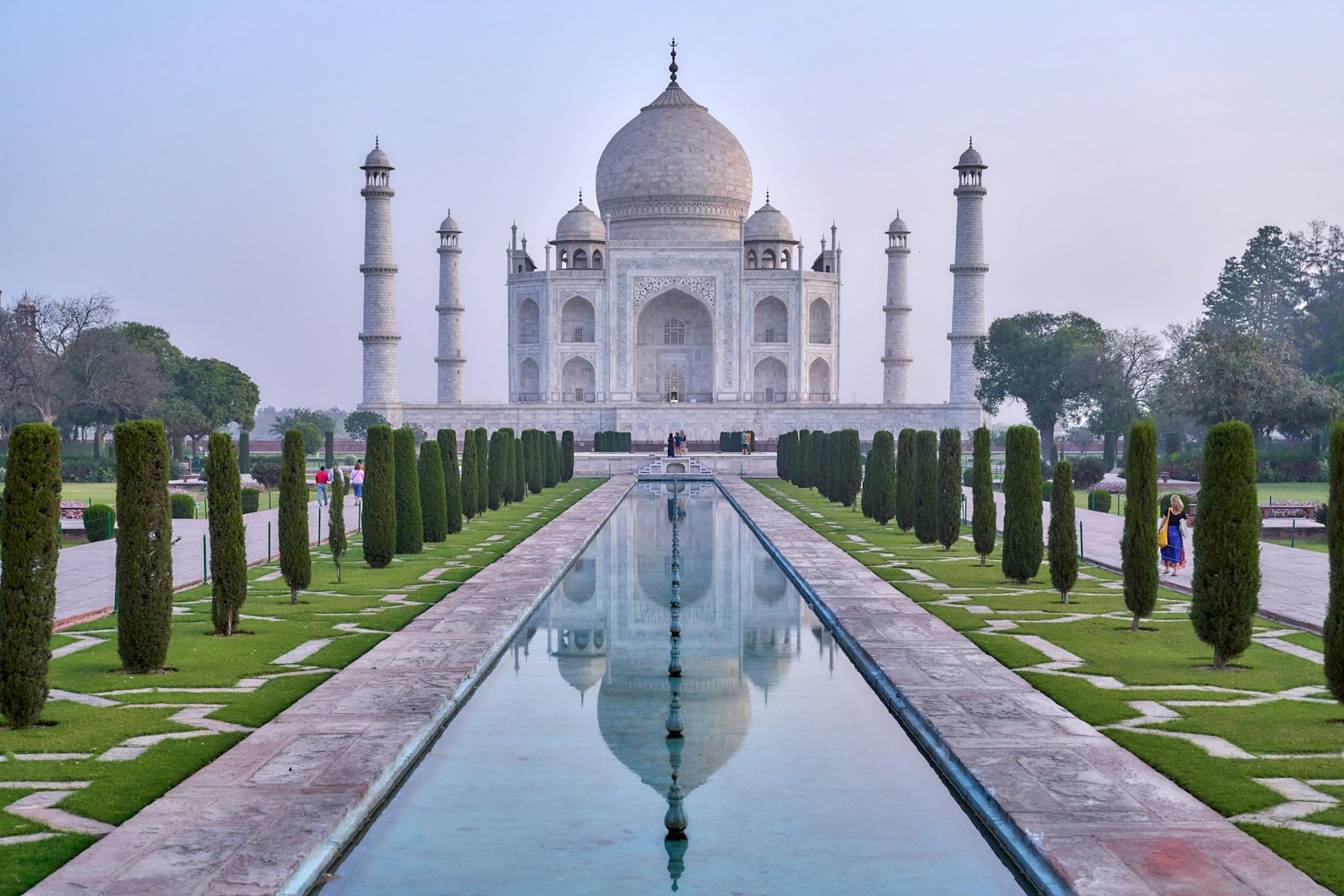
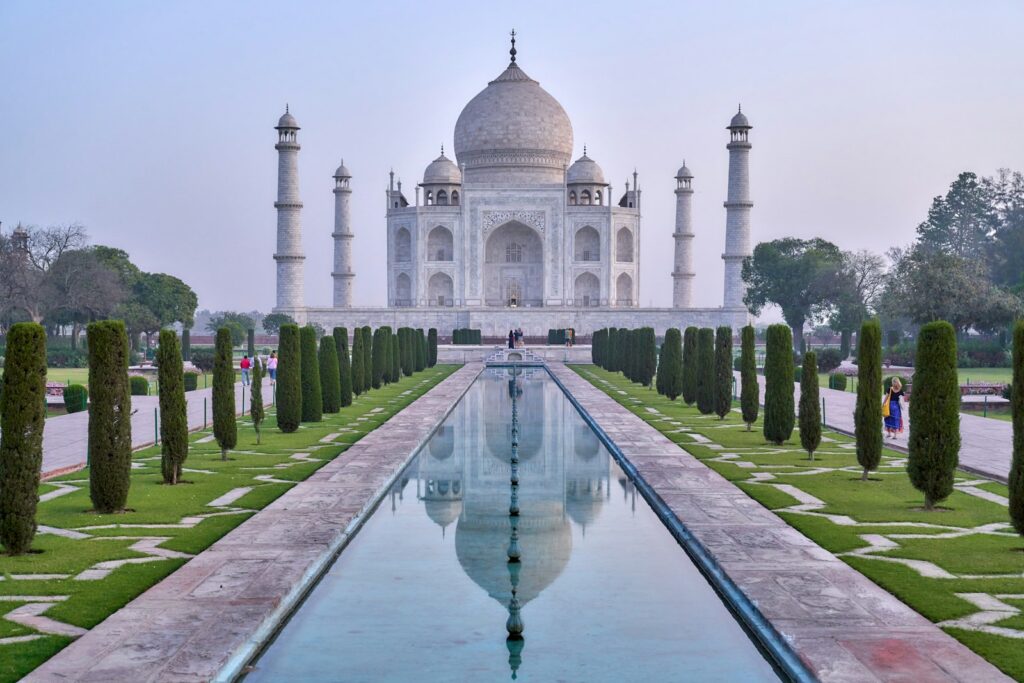
- The Taj Mahal — best visited at sunrise, both for the lighting and to avoid the worst of the crowds and heat; the marble mausoleum was built by Emperor Shah Jahan as a tomb for his wife Mumtaz Mahal
- Agra Fort — a red sandstone Mughal fortress with its own architectural weight, and views of the Taj Mahal from across the river
- Fatehpur Sikri — a remarkably preserved abandoned Mughal city, about an hour outside Agra, worth a half-day detour if time allows
One night in Agra is enough for most travelers, particularly if you catch the Taj Mahal at sunrise before continuing to Jaipur.
Jaipur: 2-3 Days
Rajasthan’s capital, known as the Pink City for the terracotta-hued buildings throughout its historic center, offers a genuinely different atmosphere from both Delhi and Agra.
What to see:
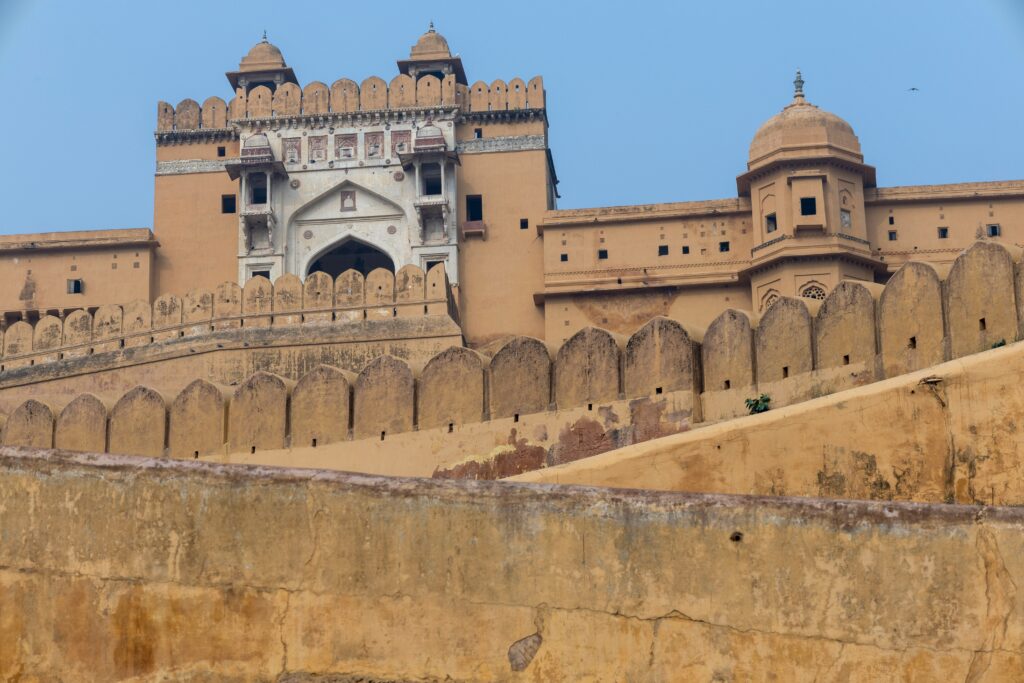
- Amber Fort — a hilltop fortress-palace with elaborate mirrored halls, best visited in the morning before the heat and crowds build
- City Palace — still partly home to Jaipur’s royal family, with museums showcasing royal artifacts and clothing
- Hawa Mahal (Palace of Winds) — an ornate pink sandstone façade with hundreds of small windows, one of Jaipur’s most photographed buildings
- Jantar Mantar — an 18th-century astronomical observatory with a collection of oversized, still-functional instruments
Two to three days allows for a comfortable pace covering Jaipur’s main sites along with time for the city’s markets, known particularly for textiles, jewelry, and blue pottery.
Suggested 8-Day Itinerary
| Days | Location | Focus |
|---|---|---|
| 1-3 | Delhi | Old and New Delhi sites |
| 4 | Travel to Agra | Agra Fort, evening arrival |
| 5 | Agra | Sunrise Taj Mahal, Fatehpur Sikri |
| 6 | Travel to Jaipur | Arrival, evening exploring |
| 7-8 | Jaipur | Amber Fort, City Palace, markets |
Travelers with more time often extend Jaipur or add a side trip to Ranthambore National Park for a tiger safari, a popular addition to the classic Golden Triangle route.
Getting Between the Three Cities
- Delhi to Agra: The Gatimaan Express, one of India’s fastest trains, covers this route in under two hours. Road travel takes around 3-4 hours via the Yamuna Expressway.
- Agra to Jaipur: Around 4-5 hours by road, or a slightly longer route by train. Many organized tours cover this leg by private car, which allows a stop at Fatehpur Sikri along the way.
- Jaipur to Delhi: Roughly 5-6 hours by road or train, completing the loop back to the capital for departure.
Many travelers book this route through an organized tour or a private driver for the full loop, which simplifies logistics considerably compared to arranging each leg independently, though independent train travel is entirely feasible with some advance planning.
When to Go
October to March is by far the most comfortable window for the India Golden Triangle tour, with manageable daytime temperatures and minimal rain across all three cities. April to June brings intense heat, particularly in Delhi and Agra, where temperatures can exceed 45°C (113°F) — genuinely difficult conditions for a full day of sightseeing. July to September is monsoon season, with heavy but generally predictable rainfall that can disrupt outdoor plans, though it also brings a welcome drop in temperature and thinner crowds.
December and January are the most popular months, though early mornings can bring surprisingly cold, foggy conditions in Delhi and Agra, occasionally affecting the visibility of the Taj Mahal itself in the early hours.
Practical Tips
- Book Taj Mahal tickets in advance online where possible, and arrive at opening time to beat both the heat and the crowds.
- Hire a licensed guide at major sites — the historical context genuinely changes the experience, particularly at Agra Fort and the Red Fort.
- Dress modestly and carry a scarf or shawl, useful both for religious sites requiring head coverings and for sun protection.
- Negotiate rickshaw and taxi fares before the ride, or use a ride-hailing app where available for more predictable pricing.
- Stay hydrated and pace yourself, especially outside the cooler winter months — heat exhaustion is a real risk for visitors unaccustomed to Indian summer conditions.
- Carry cash for smaller vendors and rural stops, though cards and digital payment apps are increasingly common in cities.
Frequently Asked Questions
How many days do you need for the India Golden Triangle tour? 7-9 days is the typical range, allowing a comfortable pace across Delhi, Agra, and Jaipur without feeling rushed. A tighter 5-6 day version is possible but leaves less room to fully explore each city.
Is it better to book an organized tour or travel independently? Both are viable. An organized tour or private driver simplifies logistics and often includes a knowledgeable guide, which many first-time visitors to India find valuable. Independent travel by train is entirely feasible and generally cheaper, with some extra planning required.
What’s the best time of day to visit the Taj Mahal? Sunrise, both for the softer light on the white marble and for avoiding the largest crowds, which build steadily through the late morning and afternoon.
Is the India Golden Triangle tour suitable for first-time visitors to India? Yes — it’s specifically designed around this audience, offering a well-trodden, well-supported route with strong tourism infrastructure, making it a genuinely practical starting point for a first trip to the country.
Planning more of your Asia trip? Check out our best time to visit Asia guide, or browse all our Asia travel guides for more.